Cold plunge after a workout: recover faster without killing your gains
Plunging after a workout genuinely helps you feel less sore and recover faster between sessions. But there's a real catch: if your goal is building muscle or strength, an ice bath right after lifting can measurably blunt those gains. Whether to plunge depends on what you trained and what you're chasing.
Last updated: 2026-05-29
The popular advice has a blind spot
Walk into any gym with a cold tub and you'll hear the same thing: smash your session, jump in the ice, recover like a pro. And for how you feel afterwards, that's not wrong — cold water does take the edge off soreness and fatigue.
The problem is that "recovery" and "adaptation" aren't the same thing. Feeling fresh tomorrow is recovery. Actually getting stronger and bigger over months is adaptation. It turns out cold water can help the first while quietly working against the second — and almost nobody tells you that part.
The catch: cold water can blunt strength and muscle gains
A 2015 study in The Journal of Physiology put this to the test. Twenty-one men strength trained for 12 weeks, twice a week. After every session, half did 10 minutes of cold-water immersion, the other half did light active recovery. Same training, only the recovery differed.
The active-recovery group gained more strength and muscle mass than the cold-water group. Markers of muscle growth — type II fibre cross-sectional area (up 17%) and the number of myonuclei per fibre (up 26%) — rose in the active group but not in the cold-water group. The researchers' own conclusion was blunt: using cold-water immersion as a regular post-exercise recovery strategy "should be reconsidered."[1]
A 2018 review in Sports Medicine reached the same theme: cold-water immersion can blunt the resistance-training signals and attenuate long-term gains in strength and muscle mass. The cold quite literally damps down the molecular "build" signal your lifting just switched on.[2]
When plunging after a workout does make sense
This isn't a reason to throw out the ice bath — it's a reason to use it on purpose. Cold-water immersion is genuinely useful when fast recovery matters more than maximising adaptation:
- Back-to-back competition or training — a tournament, a two-a-day, or anything where you need to perform again within hours.
- Endurance sessions — the same 2018 review notes cold water doesn't blunt endurance adaptations the way it does strength, and may even support some endurance signalling.[2]
- In-season athletes whose priority is feeling fresh for the next game, not adding muscle this week.
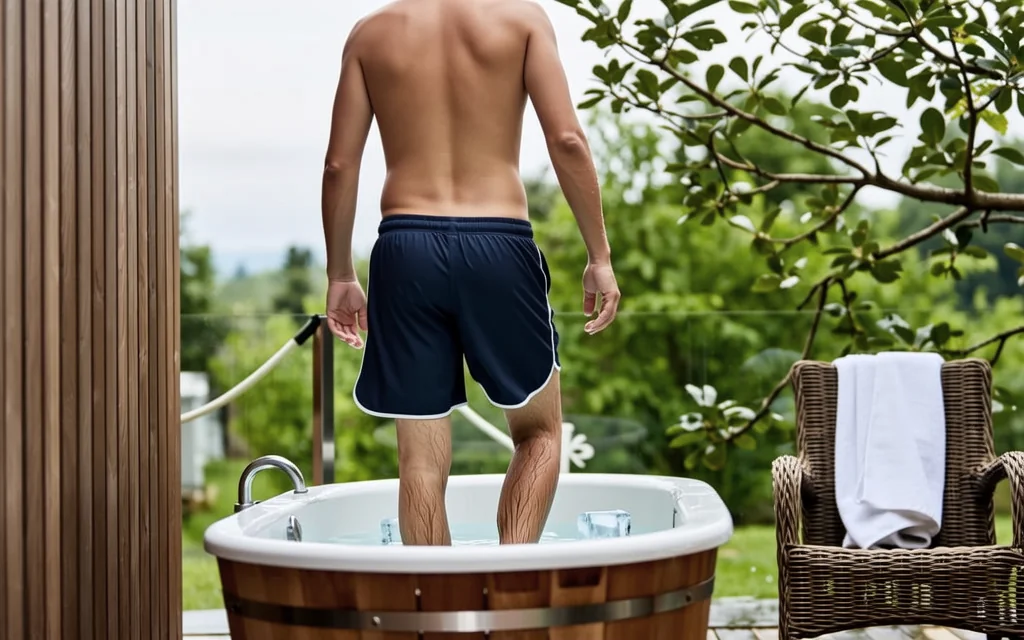
So: should you plunge after your workout?
Use the simplest filter there is — what were you training for today? If today was about building muscle or maximal strength, skip the plunge straight after, or push it several hours down the line. If today was endurance, a hard in-season session, or you just need to recover fast for tomorrow, the cold is on your side.
A sensible starting point by goal
| Your situation | Cold plunge after? | Timing |
|---|---|---|
| Hypertrophy / strength day | Better to skip | Wait 4–6h, or use rest days |
| Endurance / cardio day | Fine to use | Within ~1h post-session |
| Competition / back-to-back | Genuinely helpful | As soon as practical |
| General soreness relief | Fine, on non-lifting days | Same day is fine |
Common mistakes
- Ice-bathing right after every lifting session — the one habit most likely to quietly cost you gains.
- Going colder and longer thinking it works better. Past a point you add cold-shock risk without adding benefit; a few minutes in 10–15°C water is plenty for recovery.
- Treating a plunge as a substitute for sleep, food and protein — those do the actual recovery heavy lifting. Cold is a small lever, not the engine.
Get your number for today
Use the calculator to set a safe time for your water temperature, then build it into a weekly plan that respects your training goal.
Open the calculatorQuestions people actually ask
How long should I cold plunge after a workout?
For recovery, a few minutes in roughly 10–15°C water is enough — there's no need to go longer or colder. Use the calculator above to get a safe range for your exact temperature and experience level.
Does an ice bath after lifting really reduce muscle growth?
The evidence says it can. In a 12-week strength-training study, the cold-water group gained less strength and muscle than the active-recovery group, and key muscle-building markers only rose without the cold. If hypertrophy is your goal, don't plunge straight after lifting.
Is cold plunging after running or cycling okay?
Generally yes. Endurance adaptations don't appear to be blunted the way strength adaptations are, so a post-run plunge for recovery is much less of a trade-off. It's the heavy-lifting days where timing matters most.
How long should I wait to plunge if I lift?
If you want both the lift and the cold, separating them by several hours is a reasonable compromise, since the muscle-building signal is strongest in the first few hours after training. Better still, save cold plunges for rest or endurance days.